
Jérôme „Trëz“ Oudot: The Human, the Monstrous & the Unknown
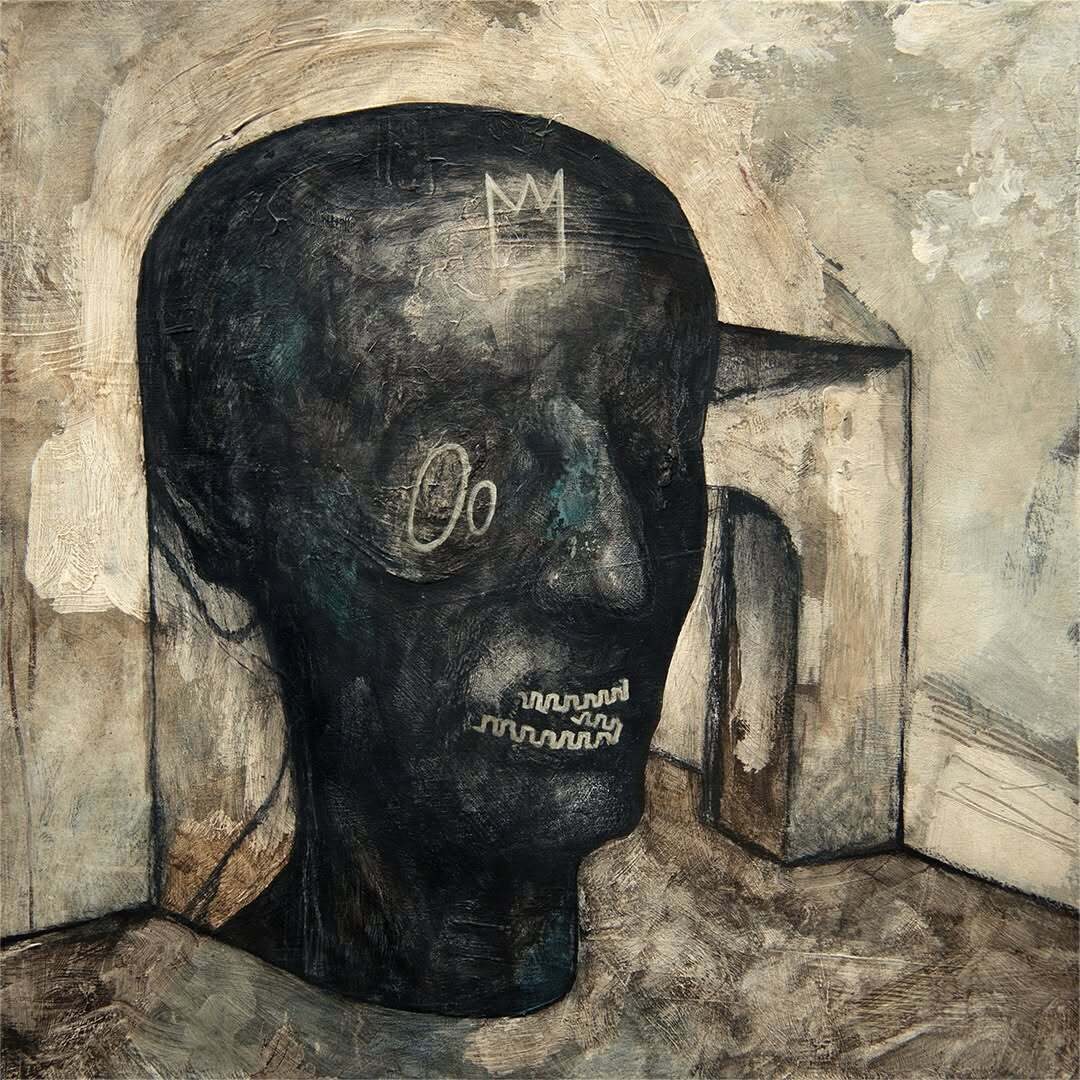
Jérôme Oudot, known in the artistic world as Trëz, belongs to that particular group of contemporary artists whose work cannot be adequately described by simply calling it “dark art,” “surrealism,” or “figurative painting.” His art exists in a much more unstable territory, somewhere between anatomy and dream, flesh and architecture, the organic and the mechanical, beauty and decay. Born in Besançon, France, in 1983, and professionally active as an artist since the late 2000s, Trëz has developed a multidisciplinary practice encompassing drawing, painting, sculpture, photography, video and digital art.
His background in CGI and digital image-making is especially important because it gives his work a peculiar double nature: his images can appear simultaneously ancient and futuristic, like fragments of forgotten mythology reconstructed through contemporary technology. The human body in his work is never simply a body. A face can become a geological surface; a torso can become an architectural structure; a limb can mutate into something animalistic; a skull can seem less like the remains of a dead person than a doorway into another dimension. Trëz himself repeatedly describes his artistic concerns through the opposition and dialogue between Matter and Spirit, and through the idea of the body as a chaotic, composite architecture in which organic and geometric forms collide.
His artistic world therefore begins with a deceptively simple question: what lies beneath appearances? The further one enters his paintings and drawings, the less certain the answer becomes. What initially looks like a monster may contain a human being; what resembles a human figure may actually be a landscape of memory, instinct, fear and transformation. His art does not offer a stable reality but instead opens a threshold into a world where identity is continually dissolving and reforming. It is precisely this instability that makes Trëz such a compelling figure in contemporary art. His paintings are not merely images of strange beings; they are investigations into what it means to possess a body, to inhabit consciousness, to be alive, and eventually to become something other than what we believe ourselves to be.
Yet Trëz's world does not emerge from nowhere. It belongs to a much larger cultural history of artists who have challenged the traditional image of the human figure. His artistic vocabulary can be situated in a broad constellation that includes Expressionism, Surrealism, dark surrealism, contemporary figurative painting, visionary art, biomechanical imagery and the visual culture of the digital age.
Artists such as Francis Bacon, Zdzisław Beksiński, H. R. Giger, Nicola Samorì, Olivier de Sagazan and Dave McKean form part of the larger artistic landscape against which his work can be understood. But Trëz is not interesting because he simply resembles these artists. What matters is the way he transforms elements of different traditions into something distinctly his own. From Bacon comes the destabilized body and the sense that flesh can become psychologically charged matter; from Giger, the unsettling union of organic and mechanical structures; from Beksiński, the atmosphere of death, ruins and inexplicable beings; from Surrealism, the conviction that the imagination may reveal truths inaccessible to ordinary perception.
Yet Trëz places these elements within a contemporary world shaped by CGI, digital manipulation, alternative visual culture, music, animation and global networks of dark art. His work consequently becomes a meeting point between several generations of artistic imagination. He stands with one foot in the history of painting and another in the technological present. This makes his art particularly relevant to the twenty-first century, because our own bodies increasingly exist between categories: biological and technological, physical and digital, individual and networked, natural and artificial. Trëz gives visual form to that uncertainty. His monsters are therefore not merely creatures of fantasy. They can be understood as metaphors for the unstable contemporary human being — a being who no longer knows exactly where the body ends and the imagination begins, where nature ends and technology begins, or whether identity is something permanent at all.

Artwork by Jérôme Trëz Oudot
The Body as an Unstable Territory
At the centre of Trëz's artistic universe stands the human body, but it is a body stripped of its traditional certainty. Western art has historically used the human figure as a symbol of harmony, proportion, identity and recognizable individuality. Trëz approaches it from the opposite direction. He takes the body apart. He stretches it, obscures it, multiplies it, transforms it and allows it to merge with other forms.
His figures often seem to be caught in the middle of an irreversible metamorphosis. They are neither completely human nor completely animal, neither entirely alive nor obviously dead. This instability is crucial because it changes the viewer's relationship with the image. We are accustomed to looking at a body and immediately understanding what we see: head, chest, arm, face, hand. Trëz interrupts this automatic recognition.
His images force the eye to hesitate. We see something familiar and then suddenly realize that it is no longer familiar. The face becomes an accumulation of surfaces; anatomy becomes almost architectural; skin resembles stone, bark, metal or geological material. The body becomes a territory rather than an object. It can be explored, excavated and interpreted like a landscape. This may explain why his figures often carry such a strong physical presence despite their distortions. Their strangeness does not make them less bodily; paradoxically, it makes us more conscious of flesh, weight, bones, wounds, muscles and mortality. Trëz seems fascinated by the fact that the human body is simultaneously intimate and mysterious. We inhabit our bodies every moment of our lives, yet we can never completely see or understand them from the inside. His art transforms this paradox into imagery. The body becomes a mysterious structure that we carry with us but never fully possess.
This approach also gives his art a philosophical dimension. If the body can change so radically, what remains of identity? If a face disappears beneath layers of distortion, does the person still exist? If a human figure becomes animalistic, does this represent degradation, liberation, or simply the revelation of something that was already there? Trëz does not seem interested in answering these questions directly. Instead, he keeps them alive inside the image. His creatures appear to exist at the point where identity becomes uncertain.
This is one reason his work can feel simultaneously frightening and strangely intimate. The viewer may initially see a monster, but the longer one looks, the more human the monster becomes. Conversely, the human figure begins to reveal something monstrous. The distinction between the two collapses. This is not horror in the conventional cinematic sense, where the monster is an external threat. Trëz's monster is much more disturbing because it may be inside the human being.
The monstrous is not necessarily an alien presence invading the body; it may be the hidden dimension of the body itself. In this sense, his work participates in a long artistic tradition of using deformation to reveal rather than conceal. Distortion becomes a form of truth. The more the figure loses its recognizable appearance, the more it may reveal something psychological about fear, desire, mortality and the instinctive side of human existence.

Artwork by Jérôme Trëz Oudot
Matter and Spirit
One of the most compelling ways to understand Trëz is through his recurring tension between matter and spirit. His art is deeply physical: graphite, charcoal, pigment, texture, skin, bone, muscle and material surfaces are everywhere. Yet the physicality of his work constantly points beyond itself. His bodies seem to contain something invisible. They suggest consciousness, memory, trauma, dreams, instinct and perhaps even spirituality.
This creates an unusual contradiction. Trëz's figures are intensely material, but they are never merely material. They seem to be containers for something that cannot be represented directly. In this sense, the distorted body becomes a philosophical instrument. It allows the artist to ask how something invisible — consciousness, soul, memory, fear — might be represented through something visible.
A painting cannot literally show a thought or a dream, but it can distort a body until the distortion begins to communicate the psychological state behind it. The body becomes a kind of translation device between inner and outer reality. Trëz's art therefore belongs to a tradition in which the physical image is used to approach metaphysical questions. Yet he avoids making these questions explicit through conventional religious symbolism. His spirituality, where it appears, is ambiguous and dark. There are no simple answers, no reassuring transcendence, no clear division between heaven and hell. Instead there is transformation, uncertainty and the suggestion that existence itself is something we do not fully understand.
This search for something beyond appearances also explains the almost archaeological quality of his work. Many of his images feel as though they have been excavated rather than invented. Layers appear to cover other layers; forms emerge from darkness; fragments of anatomy seem buried beneath surfaces. It is as if the artist is searching for a hidden organism underneath the visible one. The act of creation consequently resembles excavation.
To paint is not simply to add an image to an empty surface but to uncover something that may already exist in the imagination. This is an important distinction. The artist becomes less like an illustrator inventing creatures and more like an explorer discovering them. His monsters seem to have an existence independent of the viewer. They look as though they have come from somewhere — perhaps from dreams, memory, evolutionary history, collective fear or an unknown psychological dimension.
This gives his work its mysterious quality. We are never completely certain whether Trëz is creating these beings or merely giving them a form in which they can become visible. The question is deliberately impossible to resolve. Perhaps this is where the “magical” quality of his art comes from: the paintings suggest that imagination is not simply a human invention but a territory inhabited by forms waiting to be discovered.

Artwork by Jérôme Trëz Oudot
The Human Animal and the Contemporary Chimera
Another essential element of Trëz's world is the relationship between the human and the animal. His creatures frequently seem to occupy an intermediate evolutionary space. They may possess human anatomical references while simultaneously appearing predatory, skeletal, insect-like or otherwise non-human. This recalls the ancient mythological tradition of the chimera, in which different species are joined into one impossible body.
But Trëz's chimeras are distinctly contemporary. They do not simply reproduce classical mythology. They embody a modern anxiety about identity itself. We increasingly understand the human being as part of an ecological and biological system rather than as a completely separate species standing above nature. Evolutionary science has already disrupted the old idea of a clear boundary between humans and animals.
Contemporary technology disrupts it again: prosthetics, artificial intelligence, genetic engineering, digital avatars and virtual bodies all challenge the traditional definition of the human. Trëz's hybrid figures can therefore be interpreted as visual manifestations of a culture in which the boundaries between categories have become unstable. His creatures ask whether being human is a fixed biological condition or a temporary state within a much larger process of transformation.
There is also something psychologically powerful about the return of the animal in his work. Modern civilization often depends on suppressing the instinctive side of human existence. We construct cities, institutions, social rules and technologies to separate ourselves from the unpredictability of nature. Yet the body remains biological. Hunger, sexuality, fear, aggression, pain and mortality cannot simply be removed by civilization.
Trëz's creatures appear to bring this suppressed dimension back to the surface. They remind us that underneath language, clothing, architecture and social identity there remains an organism capable of fear and violence, vulnerability and desire. But his animals are not simply symbols of savagery. They can also represent freedom. To become less human in a Trëz painting may sometimes mean becoming less constrained by conventional identity.
The animal can be terrifying, but it can also be a figure of instinct and authenticity. This ambiguity makes his hybrid beings much more interesting than straightforward monsters. They embody both the fear of losing humanity and the possibility that humanity itself may be incomplete.

Artwork by Jérôme Trëz Oudot
Beksiński, Giger, Bacon and the Genealogy of Darkness
Trëz's work becomes even more fascinating when placed within the wider genealogy of artists who have transformed darkness into a visual language. Zdzisław Beksiński is particularly important in this context. Beksiński created landscapes populated by anonymous, skeletal, decaying and impossible figures, often refusing to provide clear explanations for their meaning. His paintings exist in a world where religious, biological and architectural forms have become indistinguishable.
Trëz shares something of this atmosphere, especially the sense that a creature can appear simultaneously ancient and futuristic, dead and alive. Yet Trëz moves beyond simple imitation by introducing a stronger interest in physical process and contemporary digital culture. His work can be understood as part of a continuing transformation of the visionary tradition.
What Beksiński imagined through painting in the twentieth century can now be imagined through a culture saturated with digital imagery, CGI, virtual environments and manipulated bodies. Similarly, H. R. Giger's biomechanical beings provide another important point of comparison. Giger created organisms in which flesh and machine became almost inseparable, producing a visual language that profoundly influenced science fiction and horror. Trëz shares this fascination with the collapse of biological and mechanical forms, but his work is generally more fragmented and painterly. The body seems less like a finished machine than like a process that is still mutating.
Francis Bacon offers a different but equally important connection. Bacon's figures are not monsters in the conventional sense. They are human beings whose flesh has been pushed into states of psychological intensity. Their deformation makes visible something that ordinary portraiture hides. Trëz similarly uses distortion as a method of psychological revelation.
His figures do not simply look strange; they seem to suffer transformation from within. Nicola Samorì and Olivier de Sagazan provide further examples of artists who have questioned the stability of the human face and body, treating identity as something that can be covered, destroyed, reconstructed or made unfamiliar. When these traditions are considered together, Trëz becomes part of a larger history of the deconstructed human figure.
The important point is that he does not merely paint darkness for its own sake. Darkness becomes a method of seeing. It allows the artist to investigate experiences that ordinary beauty may conceal: decay, fear, mortality, instinct, loneliness, uncertainty and the fragmentation of identity. His darkness is therefore not simply pessimistic. It is exploratory. The night, in his work, is the place where hidden forms become visible.

Artwork by Jérôme Trëz Oudot
From CGI to Flesh: Technology and the Ancient Image
One of the great paradoxes of Trëz's artistic world is that his imagination has been shaped by contemporary digital technology while his imagery often feels extraordinarily ancient. His early experience with CGI and 3D animation is crucial to understanding this contradiction. Digital technology allows artists to manipulate bodies in ways that would be difficult or impossible through traditional techniques: surfaces can be stretched, multiplied, deformed, combined and transformed almost infinitely.
Yet Trëz eventually moved deeply into drawing, painting and physical materials. This movement is significant because it can be read as a return from the virtual to the tangible. The digital artist becomes fascinated with graphite, charcoal, pigment, texture and the physical trace of the hand. The result is an art that contains both worlds.
His creatures can resemble corrupted digital models while simultaneously looking like cave paintings or archaeological fragments. They belong to no single historical period. They could be fossils from an imaginary civilization, organisms from a future laboratory, figures from a nightmare, or beings emerging from a medieval manuscript. This temporal ambiguity is one of the most powerful characteristics of his visual language.
The relationship between technology and the body is especially relevant today. We live in an era in which the human image has become infinitely reproducible and manipulable. Digital photographs can be altered instantly; avatars can replace physical identities; artificial intelligence can generate faces and bodies that never existed; virtual spaces allow people to inhabit forms completely different from their biological ones.
In such a cultural environment, Trëz's unstable bodies become particularly meaningful. They appear to ask: if the image of the human being can be endlessly transformed, what does it mean to remain human? His monsters can therefore be read as digital-age myths. Ancient cultures created gods, demons and hybrid creatures to explain forces they could not understand.
Contemporary culture creates cyborgs, mutants, artificial beings and virtual bodies to confront similar uncertainties. The difference is that today's unknown is often technological rather than purely supernatural. Trëz occupies precisely this boundary. His creatures feel supernatural, but they also feel engineered. They are organic, yet strangely artificial. They seem to belong simultaneously to mythology and to a future laboratory.

Artwork by Jérôme Trëz Oudot
The Underground Culture of Trëz: Music, Collectives, Darkness and the Studio
Trëz's artistic world should also be understood culturally rather than only stylistically. His career has intersected with alternative art networks, collective practices, digital art, video, exhibitions dedicated to dark or visionary imagery, and a wider visual culture that often overlaps with heavy music, horror, science fiction, tattoo culture and underground illustration. His participation in collective projects and exhibitions demonstrates that he is not simply an isolated painter working outside contemporary culture.
Rather, he belongs to a network of artists who have developed alternative ways of imagining the human figure. Music appears to be particularly important to his creative process. Accounts of his practice describe music, including atmospheric and ambient forms, as something that can help him enter a more concentrated and isolated state of creation.
The studio becomes almost a private chamber in which the ordinary world disappears. This detail matters because his paintings themselves feel like products of isolation. They do not seem to belong to the noisy visual world of advertising, social media or commercial entertainment. They feel inward. They resemble images that have been brought back from a psychological expedition.
This makes the studio almost as important as the finished artwork. The painting becomes the visible residue of an invisible process. One can imagine the artist surrounded by music, materials, unfinished bodies, fragments, sketches and digital images, moving between physical and virtual forms while trying to discover something that he cannot completely define beforehand.
This is perhaps the most romantic aspect of Trëz's art. Despite the technological aspects of his practice, there remains the old image of the solitary artist entering an unknown territory and returning with an image. Yet the contemporary version of this artist is no longer simply a painter.
He is simultaneously draftsman, digital artist, sculptor, image-maker and collector of visual fragments. His world reflects the fragmented nature of contemporary culture itself. The old boundaries between artistic disciplines have collapsed, just as the boundaries inside his creatures have collapsed. His artistic practice and his artistic subject therefore mirror each other: he makes hybrid art about hybrid beings. That may be one of the deepest principles underlying his work.

Artwork by Jérôme Trëz Oudot
Beyond the Monster: What Trëz Is Really Searching For
To call Trëz a “dark artist” is accurate only at the most superficial level. His real subject appears to be much larger: transformation. His figures are constantly becoming something else. Human becomes animal; flesh becomes architecture; organic becomes mechanical; living becomes dead; physical becomes spiritual; image becomes dream.
Nothing remains completely stable. This instability is what gives his work its unusual psychological force. The viewer enters expecting to see a creature but discovers instead a question about identity. The monster is not the conclusion of the painting; it is the beginning of an investigation.
What makes the figure monstrous? Its appearance? Its behaviour? Its unfamiliarity? Or simply the fact that it shows us something about ourselves that we would prefer not to see? In this sense, Trëz's work participates in one of the oldest functions of art: the creation of an image through which society can confront the unknown. The difference is that his unknown is not located somewhere far away. It is located inside the body.
There is also a mysterious quality in the fact that Trëz does not seem to provide a complete mythology for his creatures. He does not give them a fixed encyclopedia of names, histories and explanations. They remain partially unexplained. This absence is important.
If every creature came with a precise description, much of the magic would disappear. Their ambiguity allows the viewer to participate in the creation of meaning. A figure may remind one person of an animal, another of a corpse, another of an alien, another of a deity.
The artwork becomes a meeting point between the artist's imagination and the viewer's unconscious. In this respect, Trëz's art is not simply about looking. It is about recognizing something that one cannot quite name. That sensation — the feeling that an image is strangely familiar despite representing something impossible — may be the most characteristic emotional experience of his work.