Portraits at the Edge of Collapse
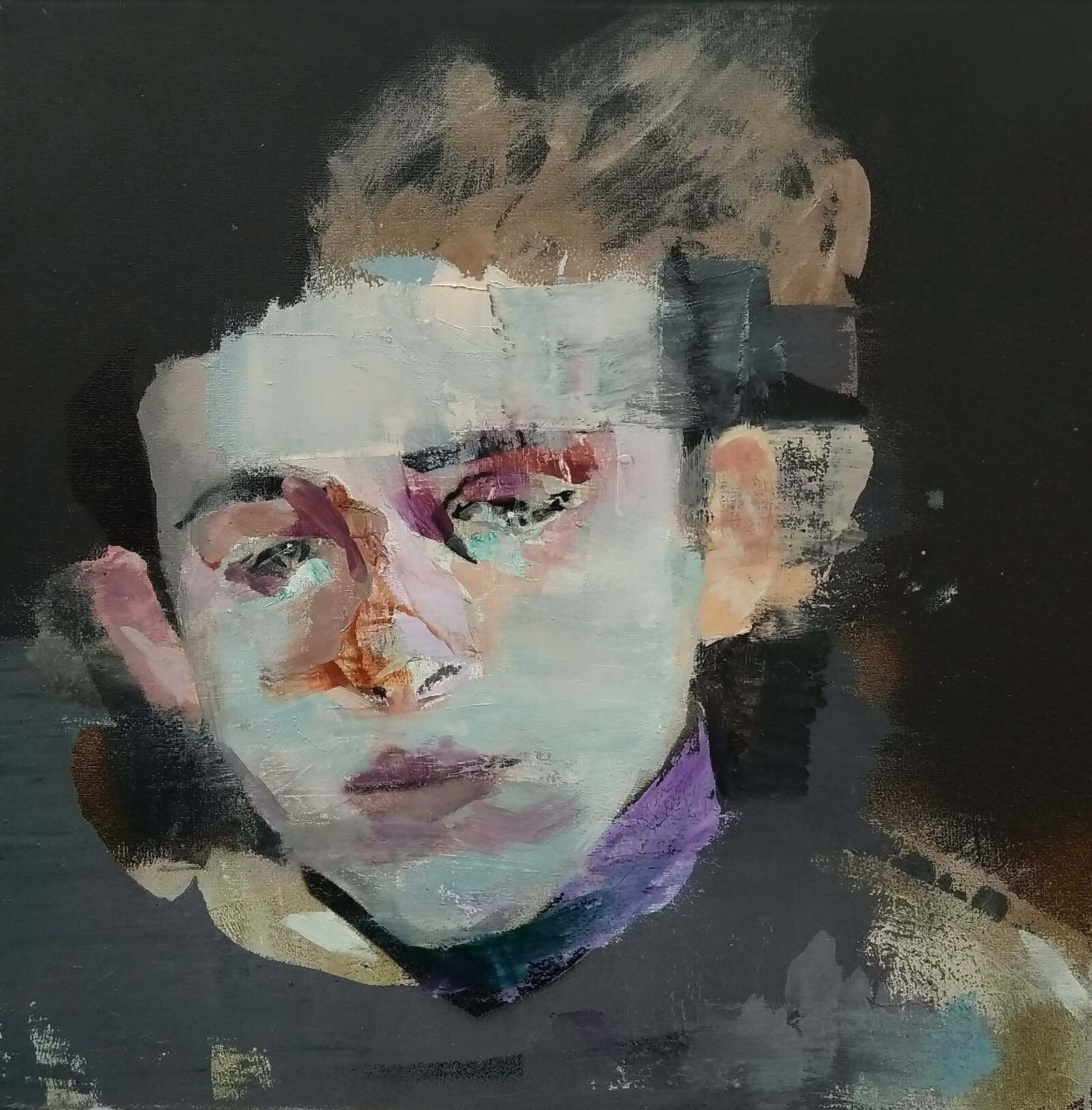
In recent years, contemporary portraiture has drifted toward polished surfaces and digital clarity, yet the work of Eugene Shadko moves in the opposite direction. These paintings reject the stability of likeness and instead expose the face as a volatile field of emotional pressure. Color behaves like a force, gesture like rupture, and the figure emerges only to be destabilized again. The surface trembles, pulses, strains. What first appears to be a portrait quickly reveals itself as a psychological climate rendered through pigment.
This visual language grows out of a tradition where figuration was never abandoned but was constantly interrogated. In that lineage, the face is not a symbol of identity but a site of existential tension. Shadko’s canvases continue that interrogation with contemporary urgency. Thick strokes collide with thin washes; violent reds cut through fragile flesh tones; contours dissolve into chromatic turbulence. The canvas becomes a battlefield of forces rather than a depiction of a person. The viewer is not invited to observe — the viewer is pulled into the storm.
The formation of this visual language is inseparable from a cultural environment shaped by rupture. In the post‑Soviet artistic landscape, figuration persisted, but never comfortably. It was always under pressure — historical, emotional, existential. Eugene Shadko inherits that pressure and transforms it into a contemporary grammar of instability. The face becomes a fragile structure, constantly threatened by its own interior forces. What emerges is not identity but the moment identity falters.
 Artwork by Eugene Shadko
Color operates as an emotional force rather than a descriptive tool. Reds behave like fissures, slicing through the face with sudden intensity. Deep blues and blacks create zones of collapse, places where the figure seems to sink inward. Pale tones stretch thinly across the surface, like membranes barely holding back turbulence. The palette is psychological, not representational. Each hue acts upon the figure, pushing it toward fragmentation or pulling it back toward coherence.
The human figure remains central, but never secure. Eyes flicker in and out of visibility. Mouths dissolve into strokes. Cheeks and foreheads break apart, reform, and break again. This instability is not an aesthetic flourish; it is the core of the work’s meaning. The figure is caught between selves, between emotional states, between collapse and reconstruction. The viewer does not encounter a person — the viewer encounters sensation.
 Artwork by Eugene Shadko
This approach aligns with a broader movement in contemporary painting that rejects polished digital aesthetics and returns to raw, tactile surfaces. Many painters explore psychological figuration, using distortion to expose vulnerability. Yet the work here carries a particular intensity. Distortion is not a stylistic device; it is an existential condition. The face is not altered — it is revealed. The instability is not added — it is uncovered.
Across exhibitions and digital platforms, Shadko’s work forms a continuous archive of emotional intensities. The consistency of the themes — fracture, pressure, instability — creates a recognizable signature. Yet this consistency is not repetition; it is excavation. Each painting digs deeper into the same question: what happens to the human face when its internal weather becomes visible? The answer shifts from canvas to canvas, but the inquiry remains relentless.
 Artwork by Eugene Shadko
After the break
In the end, Shadko’s contribution to contemporary painting lies in the transformation of the portrait into a site of exposure. The face is no longer a symbol of who someone is; it becomes evidence of what someone endures. The instability, the fracture, the chromatic violence — all of it reveals a deeper radiance. After the Break is not a metaphor. It is the condition these paintings make visible.
 Artwork by
Eugene Shadko