THE VEILED ANATOMY OF HUMAN SILENCE: The Inner World of Nikolai Tatarnikov
His emergence through digital platforms — Instagram grids, Facebook posts, scattered gallery listings — reinforces the enigmatic nature of his artistic identity. Unlike artists who construct elaborate personal narratives or cultivate public personas, Tatarnikov remains almost entirely silent about his biography. He offers no origin story, no academic pedigree, no curated myth. Instead, he allows the work to speak for him, and the work speaks in a language of emotional gravity. The absence of biographical detail becomes part of the aesthetic experience, forcing the viewer to engage with the paintings directly, without the interpretive scaffolding of biography or institutional validation. This silence is not emptiness; it is intentional space, a refusal to dilute the emotional intensity of the work with external explanations. In this way, Tatarnikov embodies a new kind of contemporary artist — one who uses digital visibility not to amplify ego but to create a dispersed, atmospheric presence, a constellation of images that collectively form a portrait of an inner world.
Tatarnikov’s digital presence is itself a phenomenon worthy of deep analysis. His Instagram grid, composed of hundreds of portraits arranged in tight, rhythmic sequences, functions as a studio wall without physical boundaries. It is a living archive of emotional states, a visual diary that documents the evolution of his inner world over time. Each post is a fragment of a larger continuum, a moment in an ongoing ritual of creation. The sheer volume of his output — hundreds of works, each one distinct yet connected — suggests a painter driven not by external demand but by internal necessity. This is not the behavior of an artist chasing trends or responding to market pressures; it is the behavior of someone who paints because painting is the only way to navigate the complexities of his emotional landscape. The repetition of faces, the subtle variations in expression, the shifts in palette and texture — all reveal a mind engaged in a sustained exploration of vulnerability, identity, and emotional truth.
 Artwork of Nikolai Tatarnikov
 Artwork of
Nikolai Tatarnikov
THE MATERIAL LANGUAGE OF DISTORTION
The material foundation of Tatarnikov’s work is built upon a profound tension between creation and erosion, a dynamic that manifests in every stroke, smear, and abrasion across his canvases. His surfaces do not behave like traditional painterly fields; they feel like contested territories where pigment and substrate wrestle for dominance. The brushwork is not merely expressive — it is confrontational, a physical enactment of emotional struggle. Each stroke carries the weight of hesitation, pressure, and release, as if the painter is negotiating with the medium rather than commanding it. The paint often appears dragged rather than applied, pulled across the surface with a force that leaves behind scars, ridges, and ruptures. These marks are not decorative; they are emotional inscriptions, traces of internal conflict made visible through material resistance. The canvas becomes a psychological battlefield where the face emerges through friction, through the slow and painful revelation of form. This emergence is never smooth; it is always interrupted by smudges, distortions, and areas where pigment thins to reveal the raw substrate beneath. In these exposed zones, the viewer senses the fragility of the image, the precariousness of identity, the way emotional truth must fight to surface through layers of concealment. Tatarnikov’s material language is therefore not simply a technique — it is a philosophy of vulnerability, a belief that the human face is something that must be excavated rather than depicted.
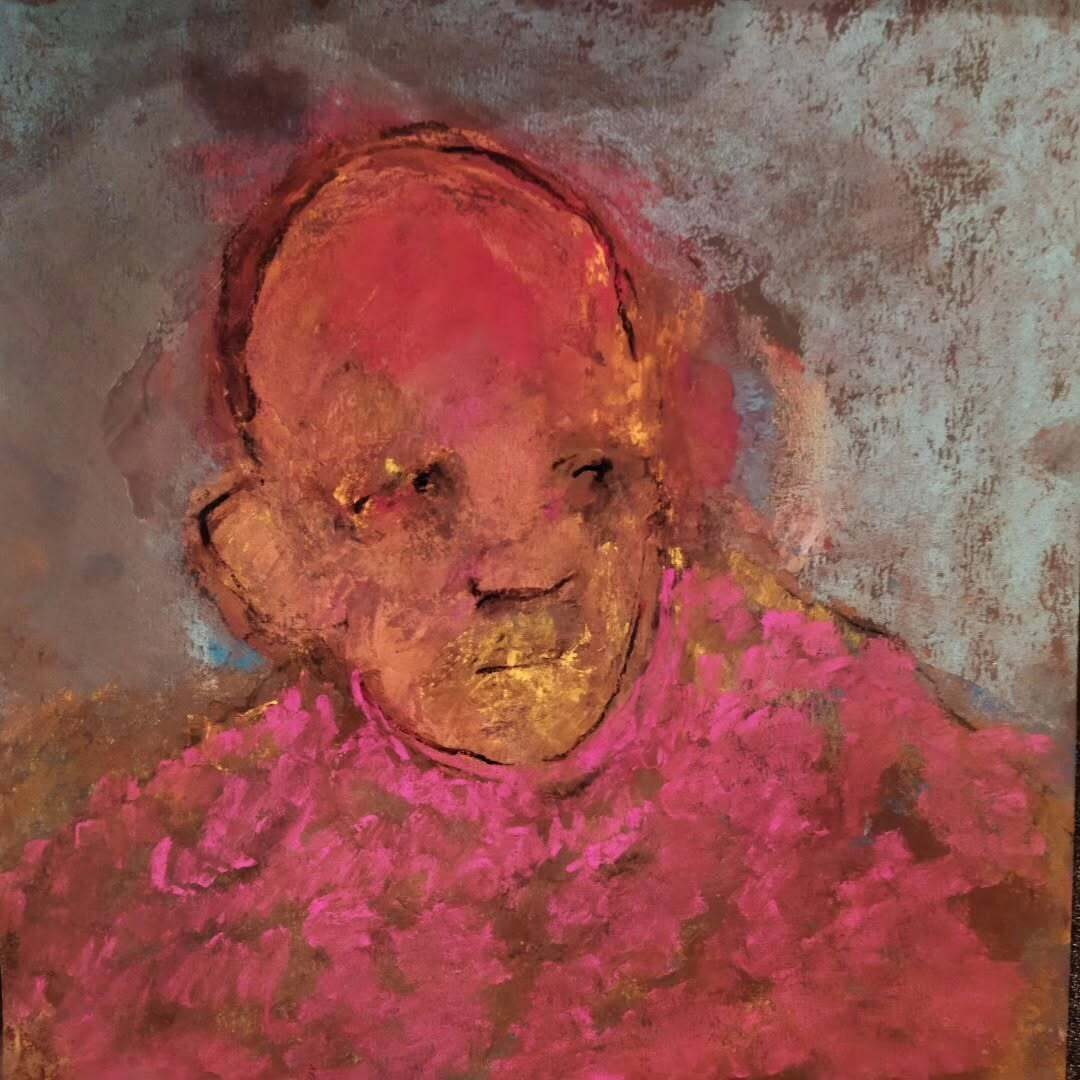
Color in Tatarnikov’s work is not a matter of aesthetic preference but a psychological code, a chromatic vocabulary that communicates emotional states with extraordinary subtlety. His palette is dominated by muted earth tones — browns that evoke soil and memory, greys that suggest fog and silence, reds that pulse with tension and suppressed intensity. These colors do not shout; they resonate quietly, creating an atmosphere of introspection that envelops the viewer. The reds are particularly striking: they are never bright or celebratory, but iron‑rich, bruised, reminiscent of dried blood or rusted metal. They carry the emotional weight of unresolved conflict, the residue of internal struggle. The browns, meanwhile, anchor the compositions in a sense of grounded melancholy, a connection to the earth, to history, to the sediment of lived experience. The greys soften the edges of the face, dissolving contours into atmospheric haze, creating a sense of emotional ambiguity. Together, these colors form a palette of vulnerability, a spectrum of emotional states that oscillate between tension and resignation. Tatarnikov’s use of color is therefore not decorative but diagnostic: each hue reveals something about the emotional condition of the figure, something about the psychological climate of the world he inhabits. His palette becomes a language of emotional truth, a way of communicating what cannot be spoken.
Tatarnikov’s distortions are among the most compelling aspects of his material practice, revealing a deep understanding of how the human face can be manipulated to express emotional fracture. These distortions are never grotesque or exaggerated; they are subtle, precise, and psychologically charged. A slight misalignment of the eyes creates a sense of disorientation, as if the figure is caught between two emotional realities. A softened mouth suggests resignation, fatigue, or the quiet acceptance of suffering. A blurred cheek dissolves into the background, creating a sense of fading presence, a visual metaphor for emotional withdrawal. These distortions are not random; they are carefully calibrated to evoke specific emotional states. They reflect the instability of identity, the way emotions distort perception, the way trauma reshapes memory. The face becomes a site of emotional negotiation, a place where the self struggles to maintain coherence in the face of internal turmoil. Tatarnikov’s distortions therefore function as psychological revelations, exposing the fractures beneath the surface of the human condition. They remind the viewer that identity is not fixed but fluid, shaped by emotional forces that are often invisible. Through these distortions, Tatarnikov transforms the face into a map of vulnerability, a landscape of emotional tension rendered through subtle shifts in form.
Despite the rawness of his material language, Tatarnikov’s compositions reveal a remarkable degree of structural intelligence. His distortions, smudges, and abrasions are not chaotic gestures but deliberate interventions that operate within a carefully constructed framework. The placement of features is always intentional, creating a balance between stability and disruption. The eyes, often the most emotionally charged element, are positioned to draw the viewer into the psychological core of the portrait. The tilt of the head creates a sense of vulnerability, a subtle gesture that conveys emotional openness. The negative space surrounding the figure is carefully managed, creating a sense of isolation that amplifies the emotional intensity of the face. Even the areas where pigment thins or dissolves are strategically placed, creating zones of fragility that contrast with areas of dense texture. This structural intelligence reveals a painter who understands the rules of composition deeply and chooses to break them with purpose. His distortions are therefore not acts of rebellion but acts of revelation, ways of exposing emotional truth through the manipulation of form. Tatarnikov’s material language is a synthesis of intuition and intention, a fusion of raw emotional expression and refined compositional strategy. It is this synthesis that gives his work its extraordinary power, its ability to convey emotional depth through the physicality of paint.
 Artwork of Nikolai Tatarnikov
THE PSYCHOLOGY OF THE FACE
The psychological dimension of Tatarnikov’s work begins with the recognition that his portraits are not representations of individuals but manifestations of emotional states. Each face he paints is a condensation of internal experience, a visual crystallization of feelings that resist verbal articulation. The absence of specific identity — no names, no stories, no contextual clues — transforms the face into a universal vessel, a site where the viewer can project their own emotional history. This universality is not achieved through abstraction but through a profound sensitivity to the subtle shifts in expression that reveal the inner life of the subject. The eyes, often blurred or softened, carry the weight of introspection, suggesting a mind turned inward, absorbed in private thought. The mouth, frequently dissolved into the surrounding texture, conveys resignation, fatigue, or the quiet acceptance of suffering. The overall composition creates a sense of emotional suspension, as if the figure is caught in a moment of internal reckoning. Tatarnikov’s portraits therefore function as psychological mirrors, reflecting not the external appearance of a person but the internal landscape of human vulnerability. They invite the viewer to enter a space of introspection, to confront the emotional truths that lie beneath the surface of everyday life.
The emotional restraint in Tatarnikov’s portraits is one of their most striking psychological features. His figures do not display overt expressions of joy, anger, or despair; instead, they exist in states of quiet introspection, their emotions conveyed through subtle shifts in posture, gaze, and texture. This restraint is not a limitation but a deliberate aesthetic choice that reflects a deep understanding of the complexity of human emotion. In many cultures, particularly in Eastern Europe, emotional expression is often subdued, internalized, transformed into quiet endurance. Tatarnikov captures this cultural trait with remarkable sensitivity, creating portraits that embody the emotional climate of a society shaped by historical trauma, social upheaval, and the quiet resilience of everyday life. The muted palette reinforces this emotional restraint, creating an atmosphere of melancholy that envelops the viewer. The faces appear to carry the weight of lived experience, the residue of memories that cannot be fully articulated. This emotional restraint creates a sense of authenticity, a feeling that the portraits reveal something true about the human condition. They do not dramatize emotion; they reveal it through silence, texture, and the subtle dissolution of form.
Tatarnikov’s portraits also explore the fluidity of identity, the way emotions distort perception and reshape the boundaries of the self. The blurred edges of his faces suggest a dissolution of identity, a sense that the figure is caught between presence and absence, between emotional clarity and emotional fog. This fluidity reflects the psychological reality of human experience: we are not static beings but shifting constellations of emotion, memory, and perception. The face becomes a site of emotional negotiation, a place where the self struggles to maintain coherence in the face of internal turmoil. The distortions — a softened eye, a dissolved mouth, a blurred cheek — reveal the fractures beneath the surface of the human condition. They suggest that identity is not fixed but fluid, shaped by emotional forces that are often invisible. Tatarnikov’s portraits therefore function as psychological revelations, exposing the instability of the self and the vulnerability that lies beneath the surface of everyday life. They remind the viewer that emotional truth is not found in the clarity of form but in the subtle shifts that reveal the inner life of the subject.
The repetition of faces across Tatarnikov’s work suggests a ritualistic exploration of emotional states, a sustained engagement with the complexities of human vulnerability. Each portrait becomes a variation on a single existential question: What remains of a person when all masks are stripped away? Tatarnikov’s answer is always the same: a fragile, trembling core rendered in muted tones and blurred contours. This repetition is not redundancy but depth, a way of uncovering layers of meaning through persistent exploration. The faces, though distinct, share a common emotional core, creating a sense of continuity and evolution. The viewer is invited to observe the subtle shifts in expression, the changes in palette, the variations in texture, each one revealing a different facet of the emotional landscape. This ritualistic approach reflects the psychological reality of emotional processing: human emotions are not linear; they recur, shift, and evolve. Tatarnikov’s portraits embody this cyclical nature, creating a visual diary of emotional states. His work becomes a shared emotional space, a place where the viewer can confront their own vulnerability through the quiet intensity of his portraits.
 Artwork of Nikolai Tatarnikov
THE CULTURAL TEMPERATURE OF POST‑SOVIET EXISTENCE
To understand the cultural temperature that permeates Tatarnikov’s work, one must first grasp the emotional climate of post‑Soviet existence — a landscape shaped by transition, uncertainty, and the quiet endurance of generations who learned to survive without the luxury of emotional expression. His portraits carry the weight of this cultural inheritance, not through explicit symbolism or historical reference, but through the atmosphere of melancholy that saturates every face. The muted palette, the blurred contours, the subdued expressions — all reflect a world where emotional truth is internalized rather than displayed. In the aftermath of ideological collapse, when the grand narratives of the Soviet era dissolved into ambiguity, individuals were left to navigate a reality defined by fragmentation and introspection. Tatarnikov’s portraits embody this shift: they focus not on collective identity but on the private emotional states that emerge when external structures fall away. The faces he paints seem suspended in a moment of existential pause, caught between the remnants of the past and the uncertainties of the future. This suspension is not paralysis but contemplation, a quiet reckoning with the emotional residue of historical upheaval. His work becomes a visual archive of post‑Soviet emotional reality, capturing the subtle tension between resilience and fragility that defines the cultural psyche of the region.
The absence of narrative in Tatarnikov’s portraits mirrors the fragmentation of identity that emerged in the post‑Soviet era. When the ideological frameworks that once shaped collective consciousness collapsed, individuals were left to construct their own narratives in a landscape devoid of clear direction. This fragmentation is reflected in the dissolution of form in Tatarnikov’s work: faces blur into the background, contours dissolve into atmospheric haze, features soften into ambiguity. These visual dissolutions are not merely aesthetic choices; they are cultural metaphors for the instability of identity in a world where the past no longer provides guidance and the future remains uncertain. The figures in his portraits appear to exist in a state of emotional liminality, caught between the desire for coherence and the reality of fragmentation. This liminality is not despair but introspection, a recognition that identity is fluid, shaped by memory, emotion, and the shifting cultural landscape. Tatarnikov’s work therefore becomes a visual exploration of the psychological consequences of historical transition, revealing the subtle ways in which cultural upheaval reshapes the emotional architecture of the self.
The emotional restraint that characterizes Tatarnikov’s portraits reflects a cultural tendency toward stoicism, a trait deeply embedded in Eastern European societies. In regions shaped by historical trauma, political repression, and economic uncertainty, emotional expression is often subdued, internalized, transformed into quiet endurance. Tatarnikov captures this cultural trait with extraordinary sensitivity, creating portraits that embody the emotional climate of a society where vulnerability is rarely displayed openly. His figures do not cry, scream, or gesture dramatically; they simply exist, carrying their emotional weight with dignity. This restraint is not emotional suppression but emotional depth, a recognition that the most profound feelings are often expressed through silence rather than spectacle. The muted palette reinforces this cultural stoicism, creating an atmosphere of melancholy that envelops the viewer. The faces appear to carry the weight of lived experience, the residue of memories that cannot be fully articulated. Tatarnikov’s portraits therefore become visual embodiments of cultural endurance, revealing the quiet strength that emerges in societies shaped by historical adversity.
Tatarnikov’s outsider‑adjacent style reflects the rise of independent art practices in post‑Soviet countries, where the collapse of institutional structures forced artists to create outside traditional frameworks. Without the support of academic institutions, galleries, or state funding, many artists turned to personal vision rather than formal training, developing styles that were raw, intuitive, and emotionally driven. Tatarnikov’s work embodies this cultural shift, demonstrating the power of individual expression in a landscape of institutional absence. His technique, characterized by coarse brushwork, muted palette, and subtle distortions, reflects a painter who developed his craft through personal exploration rather than academic instruction. This independence allows him to create without the constraints of tradition, resulting in a style that is both deeply personal and culturally resonant. His work becomes a testament to the resilience of artistic expression in the face of institutional collapse, revealing the ways in which cultural upheaval can give rise to new forms of creativity. Tatarnikov’s portraits therefore occupy a unique position in the post‑Soviet art landscape, embodying the emotional truth of a society in transition while forging a new aesthetic language rooted in introspection and vulnerability.
 Artwork of Nikolai Tatarnikov
THE DIGITAL ERA AND THE NEW ART ECONOMY
Tatarnikov’s presence in the digital sphere is not merely a matter of convenience or modern necessity; it is a profound transformation of how his art exists, circulates, and communicates. His Instagram grid, composed of hundreds of portraits arranged in tight, rhythmic sequences, functions as a living archive of emotional states, a constantly expanding visual diary that documents the evolution of his inner world. Unlike traditional studio walls, which are private, physical, and limited by space, the digital grid is infinite, public, and perpetually accessible. It allows his work to exist in a state of continuous visibility, where each new portrait becomes part of a larger constellation of emotional atmospheres. This digital presence transforms the act of viewing into a ritual of immersion: the viewer scrolls through rows of faces, each one a variation on vulnerability, each one a fragment of a larger emotional continuum. The grid becomes a psychological landscape, a territory where the viewer can wander, pause, and reflect. It is not a gallery; it is a world. And within this world, Tatarnikov’s portraits gain a new kind of power — not through spectacle, but through accumulation. The sheer volume of his work creates a sense of emotional density, a feeling that one is entering a space saturated with introspection. This digital saturation is not overwhelming; it is enveloping, drawing the viewer into the quiet gravity of his artistic universe.
The digital platform also reshapes the relationship between artist and audience, creating a direct line of communication that bypasses traditional intermediaries. This independence is not a rejection of institutional support but a recognition that the digital era offers new possibilities for artistic autonomy. By selling directly to collectors, Tatarnikov maintains control over the distribution of his work, ensuring that each piece finds a home through personal interaction rather than institutional mediation. This direct‑to‑collector model reflects a broader shift in the art world, where digital platforms have democratized access to art, allowing artists to build global audiences without relying on traditional gatekeepers. For Tatarnikov, this independence is essential: it allows him to preserve the emotional integrity of his work, free from the pressures of commercial trends or curatorial expectations. His portraits remain sincere, introspective, and emotionally grounded, untouched by the demands of the market. The digital platform becomes not a marketplace but an extension of his studio, a space where creation and distribution merge into a single, fluid process. This fluidity reflects the new art economy, where visibility is no longer controlled by institutions but by the artist’s own presence and authenticity.
The digital environment also shapes the way Tatarnikov’s work is perceived, creating a unique visual rhythm that amplifies the emotional impact of his portraits. The grid format, with its repetitive structure and uniform dimensions, emphasizes the continuity of his themes, creating a sense of emotional resonance that builds with each successive image. The viewer does not encounter his work as isolated pieces but as part of a larger emotional narrative, a sequence of faces that collectively reveal the psychological architecture of his world. This narrative is not linear; it is atmospheric, shaped by the subtle variations in expression, palette, and texture that emerge across the grid. The muted tones, the blurred contours, the subdued expressions — all create a sense of emotional coherence that envelops the viewer. The grid becomes a visual symphony, where each portrait is a note in a larger composition of vulnerability. This composition is not orchestrated; it emerges organically from the accumulation of images, revealing the emotional depth of Tatarnikov’s practice. The digital platform therefore becomes a space of emotional immersion, where the viewer can experience the full weight of his artistic world. It is a new kind of gallery, one that exists not in physical space but in the intimate realm of personal screens, where the viewer encounters his work in moments of solitude and introspection.
Tatarnikov’s digital presence also reflects the vulnerability of contemporary artists, who must navigate the tension between emotional depth and the superficial logic of online visibility. The digital platform demands constant production, immediate engagement, and visual clarity — qualities that often conflict with the introspective nature of his work. Yet Tatarnikov resists these pressures, maintaining a style that is muted, textured, and emotionally heavy. His portraits do not conform to the aesthetics of the algorithm; they challenge it. They invite the viewer to slow down, to look closely, to enter a space of introspection that defies the rapid consumption of digital content. This resistance is itself a radical act, a declaration that emotional truth cannot be compressed into the superficial logic of online visibility. Tatarnikov uses the digital platform without allowing it to dictate his style, preserving the emotional integrity of his work in a landscape dominated by spectacle. His portraits become islands of sincerity in a sea of performance, offering a rare glimpse into the quiet depths of human vulnerability. This sincerity is not nostalgic; it is contemporary, shaped by the emotional realities of digital life. Tatarnikov’s work therefore occupies a unique position in the digital era, revealing the ways in which emotional depth can survive — and even thrive — in a world defined by speed, noise, and superficiality.

Artwork of Nikolai Tatarnikov
THE RITUAL OF REPETITION
Repetition in Tatarnikov’s work is not a stylistic habit but a profound ritual, a psychological and spiritual practice that shapes the very architecture of his artistic world. Each portrait he creates is a return to the same emotional territory, a revisiting of the fragile space where identity trembles and vulnerability becomes visible. This repetition is not mechanical; it is meditative. It reflects the way human beings process emotion — not through linear progression but through cyclical revisitation. The faces he paints are not iterations of a theme but manifestations of an ongoing internal dialogue, a conversation between the self and its own emotional depths. The subtle variations in expression, palette, and texture reveal the nuances of this dialogue, the shifts in emotional climate that occur as the painter confronts the same existential question from different angles. The ritual of repetition becomes a form of emotional excavation, a way of uncovering layers of meaning that cannot be accessed through singular expression. Each portrait is a fragment of a larger emotional continuum, a piece of a mosaic that reveals the complexity of human vulnerability. Through repetition, Tatarnikov transforms the act of painting into a spiritual practice, a way of navigating the emotional terrain of his inner world with patience, sensitivity, and profound sincerity.
The cyclical nature of Tatarnikov’s work mirrors the psychological reality of emotional processing, where feelings recur, shift, and evolve over time. Human emotions are not static; they are fluid, shaped by memory, experience, and the subtle changes in internal and external circumstances. Tatarnikov’s portraits embody this fluidity, revealing the ways in which emotional states transform through repeated engagement. The faces he paints are not fixed representations but dynamic expressions of vulnerability, each one capturing a different moment in the emotional cycle. The repetition of faces creates a sense of continuity, a feeling that the viewer is witnessing the evolution of an emotional state rather than isolated expressions. This continuity is not monotony; it is depth. It allows the viewer to observe the subtle shifts in the painter’s emotional world, the changes in palette that reflect shifts in mood, the variations in texture that reveal changes in intensity. The cyclical nature of his work therefore becomes a visual representation of the psychological process of emotional reflection, a way of capturing the complexity of human experience through repeated engagement with the same emotional territory. Tatarnikov’s portraits become a visual diary of vulnerability, a record of the emotional states that shape the human condition.
The ritual of repetition also creates a sense of universality in Tatarnikov’s work, allowing the viewer to connect with the portraits on a deeply personal level. The faces he paints, though distinct, share a common emotional core, a sense of fragility that resonates with the viewer’s own experiences of vulnerability. This universality is achieved not through abstraction but through the repetition of emotional truth. The faces become mirrors, reflecting the viewer’s own emotional history, the moments of introspection, fatigue, and quiet suffering that define the human condition. The repetition of faces creates a sense of familiarity, a feeling that the viewer has encountered these emotions before, both in the paintings and in their own life. This familiarity does not diminish the emotional impact of the work; it amplifies it. It creates a sense of shared humanity, a recognition that vulnerability is not an individual experience but a universal one. Tatarnikov’s portraits therefore become a shared emotional space, a place where the viewer can confront their own vulnerability through the quiet intensity of his work. The ritual of repetition transforms the act of viewing into a form of emotional reflection, a way of engaging with the complexities of human experience through the subtle variations in the painter’s emotional world.
The ritualistic nature of Tatarnikov’s practice suggests a painter driven by necessity rather than ambition, a creator who paints not to produce but to understand. His work is not a performance but a meditation, a way of navigating the emotional terrain of his inner world with patience and sincerity. The repetition of faces becomes a form of emotional grounding, a way of returning to the same fragile space where vulnerability becomes visible. This grounding is essential to the painter’s practice, allowing him to maintain a sense of emotional continuity in a world defined by uncertainty and fragmentation. The ritual of repetition also reflects the painter’s commitment to emotional truth, a refusal to dilute the intensity of his work with superficial variation or dramatic gestures. Each portrait is a sincere engagement with the complexities of human vulnerability, a quiet exploration of the emotional states that shape the human condition. Through repetition, Tatarnikov creates a body of work that is both deeply personal and profoundly universal, a visual testament to the power of introspection and the resilience of emotional truth. His portraits become a sanctuary of vulnerability, a place where the viewer can confront the fragility of the human condition through the quiet intensity of his artistic world.
 Artwork of Nikolai Tatarnikov
THE CURATORIAL VIEW — AN EXHIBITION OF SILENCE
Curating an exhibition of Tatarnikov’s work requires entering a world where silence is not absence but presence, where the emotional atmosphere of the paintings becomes the architecture of the space itself. His portraits do not behave like traditional figurative works that demand narrative context or biographical framing; instead, they generate their own environment, a field of quiet gravity that envelops the viewer the moment they step inside. The curator’s task is not to explain the paintings but to create conditions in which their emotional resonance can unfold naturally. This means constructing a space where the viewer is invited to slow down, to breathe, to allow the muted tones and blurred contours to settle into their perception. The lighting must be soft, diffused, avoiding harsh contrasts that would disrupt the delicate emotional balance of the works. The walls should be neutral, perhaps in tones that echo the palette of the paintings — warm greys, muted browns, soft ochres — creating a seamless transition between the environment and the images. The arrangement of the portraits should follow a rhythm rather than a narrative, allowing the viewer to move through the space as if wandering through a psychological landscape. Each portrait becomes a station in a pilgrimage of introspection, a moment of quiet encounter with the fragile core of human vulnerability. The exhibition is not a display; it is an immersion, a sanctuary where silence becomes the medium through which emotional truth is communicated.
The sequencing of Tatarnikov’s portraits within the exhibition is crucial, as it shapes the emotional journey the viewer experiences. His works are not isolated expressions but fragments of a larger continuum, each one revealing a different facet of the emotional landscape he inhabits. The curator must therefore arrange the portraits in a way that emphasizes this continuity, creating a visual rhythm that guides the viewer through the subtle variations in expression, palette, and texture. The faces should not be grouped by similarity but by emotional resonance, allowing the viewer to sense the shifts in mood and intensity that occur across the body of work. Some portraits may be placed in clusters, creating moments of emotional density where the viewer is confronted with multiple variations of vulnerability. Others may be isolated, creating pockets of silence where the viewer can pause and reflect. The exhibition should avoid linear narratives, instead embracing the atmospheric nature of Tatarnikov’s work, allowing the viewer to move freely through the space, discovering connections and contrasts through their own emotional engagement. This freedom is essential, as it mirrors the introspective nature of the paintings themselves, inviting the viewer to enter a state of contemplation where the boundaries between the self and the image begin to dissolve. The sequencing becomes a form of choreography, a dance of emotional resonance that unfolds through the quiet intensity of the portraits.
The materiality of Tatarnikov’s work must be emphasized in the curatorial approach, as the textures, smudges, and abrasions are not merely visual elements but physical manifestations of emotional tension. The lighting should be arranged to highlight these material details, revealing the subtle ridges and ruptures that give the portraits their tactile presence. The viewer should be able to see the pressure of the brush, the drag of the pigment, the areas where the paint thins to reveal the raw substrate beneath. These material traces are essential to the emotional impact of the work, as they reveal the physical struggle involved in the creation of the image. The curator must therefore create conditions in which the viewer can engage with the materiality of the paintings on an intimate level, perhaps through close viewing stations or angled lighting that emphasizes the texture of the surface. The exhibition should encourage slow looking, inviting the viewer to linger over the details, to observe the subtle shifts in texture that reveal the emotional intensity of the painter’s process. This emphasis on materiality transforms the exhibition into a study of emotional physicality, a space where the viewer can witness the way pigment becomes a record of psychological fracture. The paintings are not smooth windows into emotional truth; they are textured landscapes where vulnerability is inscribed through the physicality of paint.
The curatorial narrative of the exhibition must focus on the universality of Tatarnikov’s portraits, emphasizing the way they transcend individual identity to reveal the shared emotional experiences that define the human condition. The absence of specific identity in the paintings — no names, no stories, no contextual clues — allows the viewer to connect with the work on a deeply personal level, projecting their own emotional history onto the blurred faces. The exhibition should therefore avoid biographical framing, instead creating a space where the viewer can engage with the portraits as mirrors of their own vulnerability. The wall texts should be minimal, offering only subtle guidance rather than explicit interpretation, allowing the viewer to enter the emotional world of the paintings without distraction. The exhibition becomes a shared emotional space, a place where the boundaries between the self and the image dissolve, revealing the universality of vulnerability. Tatarnikov’s portraits become conduits for emotional reflection, inviting the viewer to confront the fragility of the human condition through the quiet intensity of his work. The curatorial narrative is therefore not a story but an atmosphere, a space where silence becomes the medium through which emotional truth is communicated. The exhibition is not an event; it is an experience, a journey through the emotional landscapes that define Tatarnikov’s artistic world.
 Artwork of Nikolai Tatarnikov
THE BIOGRAPHY RECONSTRUCTED FROM PAINTING
Reconstructing Tatarnikov’s biography from his paintings requires approaching his work as a form of emotional archaeology, where each portrait becomes a fragment of a life lived in introspection, silence, and psychological depth. Because he offers almost no biographical information, the paintings themselves become the primary documents of his existence, revealing the emotional climate in which he lives, the cultural forces that shape him, and the internal struggles that define his artistic identity. The muted palette suggests a life shaped by environments where emotional expression is subdued — perhaps small apartments, quiet streets, dimly lit interiors, spaces where introspection becomes a daily ritual. The blurred faces imply a painter who has spent years observing people quietly, absorbing their emotional atmospheres without intruding upon their lives. This observational sensitivity suggests a solitary temperament, someone who moves through the world with a heightened awareness of emotional nuance. The repetition of faces indicates a mind that returns to the same emotional territory repeatedly, not out of habit but out of necessity, as if the painter is trying to understand something fundamental about the human condition. This necessity reveals a biography shaped not by external events but by internal exploration, a life defined by the pursuit of emotional truth rather than social achievement. Tatarnikov’s paintings therefore become a map of his inner world, revealing a biography written not in words but in pigment, texture, and silence.
The cultural atmosphere embedded in Tatarnikov’s work suggests a biography rooted in Eastern European emotional reality, shaped by the quiet endurance that defines post‑Soviet life. The muted tones, the subdued expressions, the introspective atmosphere — all reflect a world where emotional resilience is forged through historical adversity. This cultural inheritance suggests a childhood or adolescence spent in environments where vulnerability was not openly expressed, where emotional truth was carried quietly beneath the surface. The faces he paints seem to carry the weight of generational memory, the residue of stories told in whispers, the emotional climate of families shaped by transition, uncertainty, and the quiet dignity of survival. This cultural context implies a biography where the painter learned early to observe rather than speak, to feel deeply rather than perform, to translate emotional truth into subtle gestures rather than dramatic expressions. The emotional restraint in his portraits reflects a life shaped by environments where silence is not emptiness but communication, where the most profound feelings are expressed through quiet presence rather than verbal articulation. Tatarnikov’s biography therefore emerges as a story of emotional inheritance, a life shaped by the cultural forces that define Eastern European existence — melancholy, introspection, resilience, and the quiet endurance of the human spirit.
Tatarnikov’s outsider‑adjacent style suggests a biography shaped by independence rather than institutional training, a life lived outside the structures of academic art education. His technique — coarse brushwork, muted palette, subtle distortions — reflects a painter who developed his craft through personal exploration rather than formal instruction. This independence implies a biography where the painter learned through observation, experimentation, and emotional necessity rather than through academic guidance. The rawness of his technique suggests a life where art was not a profession but a refuge, a way of navigating emotional complexity through the physicality of paint. The absence of academic polish reveals a painter who values emotional truth over technical perfection, someone who approaches the canvas not as a space for performance but as a space for revelation. This independence also suggests a biography shaped by environments where institutional support was limited, where the painter had to forge his own path through the art world without the guidance of mentors or the validation of institutions. The direct‑to‑collector model he uses reflects this independence, revealing a life where artistic survival depends on personal connection rather than institutional recognition. Tatarnikov’s biography therefore emerges as a story of self‑creation, a life shaped by the pursuit of emotional truth through independent artistic practice.
The prolific output of Tatarnikov’s work suggests a biography shaped by ritual, discipline, and emotional necessity, a life where painting is not an activity but a daily practice of introspection. The hundreds of portraits he has created reveal a painter who works constantly, driven by an inner compulsion to translate emotional tension into pigment. This compulsion suggests a biography where art is intertwined with emotional survival, where the act of painting becomes a way of processing internal states, navigating psychological complexity, and maintaining emotional equilibrium. The repetition of faces indicates a life where the painter returns to the same emotional territory repeatedly, not out of habit but out of a desire to understand something fundamental about the human condition. This desire reveals a biography shaped by introspection, a life lived in close proximity to emotional truth, where the painter confronts vulnerability daily through the act of creation. The digital archive of his work — hundreds of posts arranged in rhythmic sequences — suggests a biography where the painter documents his emotional evolution through the accumulation of images, creating a visual diary of vulnerability that spans years. Tatarnikov’s biography therefore emerges as a story of emotional dedication, a life shaped by the ritual of painting, the pursuit of emotional truth, and the quiet resilience of the human spirit.
 Artwork of Nikolai Tatarnikov
THE FUTURE OF HIS WORLD
The future of Tatarnikov’s artistic world is shaped by the internal logic of his work — a logic defined not by external trends or market pressures but by the emotional necessity that drives his practice. His portraits already exist at the threshold between figuration and dissolution, and it is likely that his future work will push this threshold further, exploring the delicate boundary where the human face begins to dissolve into pure atmosphere. This dissolution is not abstraction for its own sake; it is a deepening of emotional exploration, a way of capturing the subtle shifts in internal states that cannot be expressed through clear contours or stable forms. As his practice evolves, the faces may become more ephemeral, more fragile, more suggestive of emotional states that hover at the edge of articulation. The palette may shift toward even more muted tones, creating an atmosphere of introspection that envelops the viewer in a sense of emotional suspension. The textures may become more pronounced, revealing the physical struggle involved in the creation of the image. This evolution reflects a painter who is not content with repeating established forms but seeks to deepen his engagement with the emotional truth that defines his work. Tatarnikov’s future therefore lies not in stylistic reinvention but in emotional intensification, a deepening of the quiet gravity that already permeates his portraits.
As Tatarnikov’s emotional world expands, it is likely that his work will move toward larger formats, creating monumental portraits that amplify the emotional impact of his practice. The small and medium‑sized works he currently produces carry extraordinary emotional weight, but larger canvases would allow him to explore the full physicality of his material language. The coarse brushwork, the textured surfaces, the subtle distortions — all would gain new resonance when expanded to a scale that envelops the viewer. A monumental portrait would not simply be a larger version of his existing work; it would be an immersive environment, a space where the viewer is confronted with the full intensity of the emotional landscape he creates. The face, enlarged to a scale that dominates the visual field, would become a terrain of vulnerability, a landscape of emotional tension rendered through pigment and texture. The viewer would be invited to enter this terrain physically, experiencing the emotional atmosphere of the work through proximity and scale. This evolution toward larger formats reflects a painter whose emotional world is expanding, whose practice demands a scale that matches the depth of his introspection. Tatarnikov’s future therefore includes the possibility of monumental works that transform his portraits into immersive environments, creating spaces where emotional truth becomes a physical experience.
Tatarnikov’s future may also involve the creation of series‑based projects, cycles of paintings that explore specific emotional states with sustained focus. His current practice already contains the seeds of this evolution, as the repetition of faces suggests a painter who returns to the same emotional territory repeatedly, exploring its nuances through subtle variations in expression, palette, and texture. A series‑based project would allow him to deepen this exploration, creating cycles of portraits that examine specific emotional states — fatigue, introspection, melancholy, resignation — with the intensity and focus of a psychological study. Each series would become a chapter in his emotional world, a sustained engagement with the complexities of human vulnerability. The viewer would be invited to move through these cycles as if reading a book, encountering the subtle shifts in emotional climate that occur across the body of work. This evolution reflects a painter whose practice is already structured by emotional continuity, whose future lies in expanding this continuity into structured cycles of exploration. Tatarnikov’s future therefore includes the possibility of series‑based projects that transform his portraits into chapters of emotional truth, creating a body of work that is both deeply personal and profoundly universal.
As Tatarnikov’s work gains visibility through digital platforms, it is likely that his future will include greater recognition in the international art world. His emotional sincerity, stylistic consistency, and psychological depth make his work highly resonant with collectors and curators who seek art that transcends superficial trends and engages with the complexities of human experience. His outsider‑adjacent style, rooted in introspection and emotional truth, aligns with contemporary movements that value authenticity over spectacle, vulnerability over performance. This alignment suggests that his work may find a place in exhibitions, publications, and collections that focus on emotional realism, psychological portraiture, and post‑Soviet cultural expression. The digital platform, which already serves as a global archive of his work, will continue to expand his audience, connecting him with viewers who respond to the quiet gravity of his portraits. This recognition is not a matter of ambition but a natural consequence of the emotional truth that defines his practice. Tatarnikov’s future therefore includes the possibility of greater visibility, not through self‑promotion but through the resonance of his work, which speaks to the universal experience of vulnerability. His world will expand, not through external validation, but through the quiet power of emotional truth.
 Artwork of Nikolai Tatarnikov
CONCLUSION
In the end, Tatarnikov’s work stands as a testament to the profound power of emotional sincerity in a world increasingly dominated by spectacle, performance, and superficiality. His portraits, stripped of narrative, identity, and contextual framing, reveal the fragile core of human existence with a clarity that transcends language, culture, and historical moment. They do not seek to impress; they seek to reveal. They do not attempt to construct meaning; they expose the emotional sediment that lies beneath the surface of everyday life. In their muted tones, blurred contours, and subtle distortions, they capture the quiet tremors of vulnerability that define the human condition. Tatarnikov’s work reminds us that emotional truth is not found in dramatic gestures or grand narratives but in the subtle shifts of expression that occur when the façade collapses and the raw self emerges. His portraits are not images; they are emotional atmospheres, spaces where the viewer encounters the fragile architecture of their own inner world. Through his work, Tatarnikov offers a vision of art that is not about representation but revelation, not about performance but presence. He invites the viewer into a space of introspection, a sanctuary where silence becomes the medium through which emotional truth is communicated. In this sanctuary, the viewer confronts the fragility of the human condition, recognizing that beneath every mask lies a trembling core of vulnerability that binds us all.
Tatarnikov’s world is defined by silence, but it is a silence rich with emotional resonance, a silence that speaks more profoundly than any narrative or explanation could. His portraits exist in a state of quiet gravity, drawing the viewer into an atmosphere where introspection becomes inevitable. This atmosphere is not constructed through dramatic contrasts or bold gestures but through the subtle interplay of muted tones, blurred contours, and textured surfaces. The faces he paints do not demand attention; they invite contemplation. They do not confront the viewer; they wait for the viewer to approach them with patience and sensitivity. In this waiting, they reveal the emotional depth that lies beneath their fragile forms. Tatarnikov’s world is not linear; it is atmospheric, shaped by the quiet tremors of vulnerability that ripple through each portrait. It is a world where emotional truth emerges through silence, where the boundaries between the self and the image dissolve, creating a shared space of introspection. This shared space is not a gallery; it is a psychological environment, a place where the viewer encounters the emotional realities that define the human condition. Tatarnikov’s work therefore becomes a form of emotional architecture, constructing spaces where vulnerability can be experienced, reflected upon, and understood. In these spaces, the viewer discovers that emotional truth is not a destination but a process, a continuous engagement with the fragile core of human existence.
Tatarnikov’s legacy will not be defined by biography, institutional recognition, or historical context; it will be defined by the emotional impact of his work, by the quiet power of the portraits that reveal the fragile architecture of the human condition. His paintings form a continuum of emotional states, a visual diary of vulnerability that spans years, perhaps decades, capturing the subtle shifts in internal climate that shape the human experience. This continuum is not a narrative but a landscape, a terrain of introspection where the viewer encounters the emotional truths that lie beneath the surface of everyday life. Tatarnikov’s work transcends identity, culture, and historical moment, offering a universal exploration of vulnerability that resonates across boundaries. His portraits are not images of individuals; they are manifestations of emotional truth, reflections of the shared fragility that binds us all. In their quiet intensity, they remind us that emotional truth is not found in clarity but in ambiguity, not in stability but in dissolution, not in performance but in presence. Tatarnikov’s legacy is therefore not a story but an atmosphere, a space where the viewer encounters the fragile core of human existence through the quiet gravity of his work. His portraits will endure not because they depict recognizable faces but because they reveal the emotional truths that define the human condition. In this revelation, Tatarnikov becomes not just a painter but a chronicler of vulnerability, a creator of emotional worlds that invite the viewer to confront the fragile architecture of their own inner life.