
The inner citadel of shadow
The treshold of shadow and human presence
The architecture of darkness
The figure as a site of transformation
Gesture becomes another crucial element in this transformation. A tilted head, a raised hand, a bowed posture—each gesture carries emotional weight, revealing the inner state of the figure. Kyrtis uses gesture as a language of interiority, a way of communicating the unspoken emotions that shape human experience. These gestures do not describe action but emotion, revealing the psychological currents that animate the figure. They become the visible traces of an interior drama, the physical manifestations of a deeper emotional landscape. Kyrtis’ figures speak through silence, through posture, through the subtle movements of the body.
Ultimately, the transformation of the figure reflects the viewer’s own psychological journey. As the viewer engages with the image, they become aware of their own shifting emotions and perceptions. Kyrtis’ figures become mirrors, reflecting the viewer’s inner transformation. The image becomes a catalyst for introspection, a space where the viewer can explore their own emotional landscape. In this sense, the figure is not merely a subject but a site of encounter, a place where the viewer confronts the complexities of their own identity. Kyrtis constructs figures that transform not only themselves but the viewer, creating a profound sense of connection and resonance.
 Artwork by
Konstantinos Kyrtis
The psychology of ambiguity
The ritual of seeing
 Artwork by Konstantinos Kyrtis
The cultural resonance of Kyrti's vision
The materiality of emotion
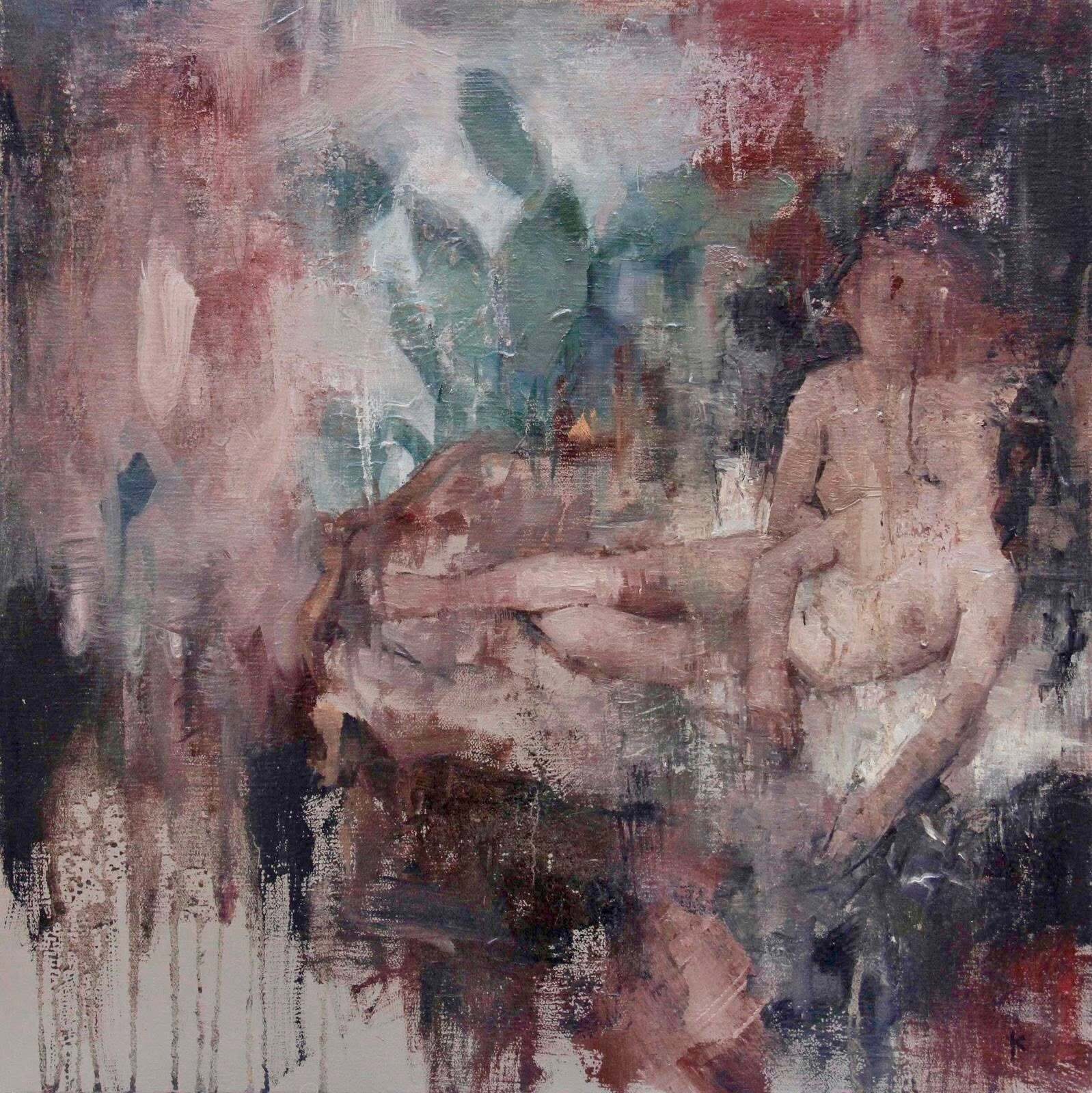
The material presence of paint in these images is not a technical detail but a fundamental component of their emotional architecture. The texture, the density, the weight of the brushstrokes—all of it contributes to a sense of physical intimacy that anchors the psychological depth of the image. Konstantinos Kyrtis treats paint not as a medium but as a substance of emotion. The surface becomes a terrain where interior forces take physical form, where consciousness manifests as tactile density. This materiality gives the images a visceral presence, making the emotional weight of the figure something the viewer can almost feel beneath their fingertips.
The surfaces shaped by Kyrtis behave like emotional membranes. The thick shadows, the velvety transitions, the subtle textures—all create a sense of density that mirrors the gravity of the figure’s interior life. The paint becomes a physical analogue of psychological experience, capturing the heaviness of grief, the softness of introspection, the density of longing. The viewer is drawn into these surfaces, compelled to explore their tactile nuances and the emotional depths they contain. Kyrtis’ materiality is not expressive in the gestural sense; it is expressive in the psychological sense. The paint becomes a vessel of interior significance.
This material presence also contributes to the ritualistic atmosphere of Kyrtis’ visual language. The surfaces feel deliberate, as if each stroke were part of a ceremonial act of construction. The paint carries the weight of intention, the gravity of a slow, contemplative process of revelation. Kyrtis’ materiality is not spontaneous; it is solemn. It feels as though the image were built within a space of introspection rather than a studio. This ritualistic materiality gives the images a sense of consecration, as if they were created within a chamber of emotional significance.
Ultimately, the materiality of emotion in Kyrtis’ imagery serves as a reminder that human experience is not purely psychological but also physical. The paint evokes the tactile qualities of emotion—the heaviness, the softness, the density. The viewer is drawn into the material surface, compelled to engage with the physicality of the image and the emotional weight it carries. Kyrtis constructs a material citadel of shadow, a place where emotion becomes substance and interiority becomes texture.
 Artwork by Konstantinos Kyrtis
The silence within the image
The human condition as a painted landscape
 Artwork by Konstantinos Kyrtis
The enduring flame of human presence