Erosion Without Witnesses
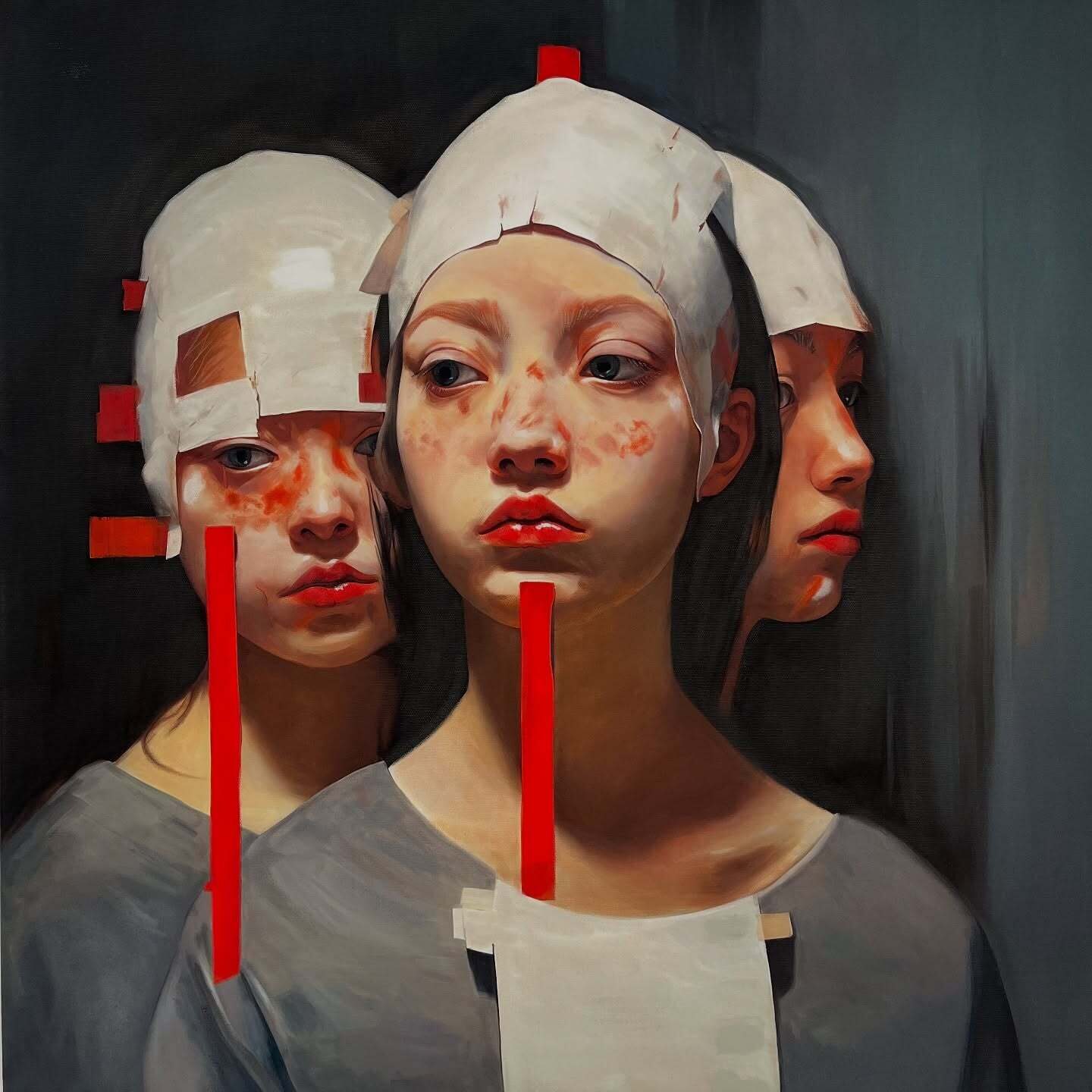
Rupture becomes the climax of Zerka’s narrative structure, the moment where accumulated erosion and compression reach a threshold and the image breaks. The fractured eye, the dissolved mouth, the collapsing contour are not symbols but structural events, points where the painting reveals the instability of identity under emotional or historical strain. Rupture is the moment where the plot peaks, where the forces acting upon the image become too intense for the surface to hold. The viewer experiences rupture as a revelation, a sudden exposure of the fragility that has been building throughout the painting. It is the point where narrative becomes palpable, where the image’s internal tensions erupt into visible form.
 © Nae Zerka
Ultimately, Zerka’s work challenges traditional figurative narrative structures by proposing that plot can emerge from the movement of forces across a surface rather than from the actions of characters within a scene. Their paintings become chronicles of pressure, records of emotional climates, testimonies to the way identity is shaped by forces that remain invisible yet undeniably real. The narrative emerges from the marks left behind, from the erosion patterns that reveal the history embedded in the image. Zerka’s art becomes a new form of storytelling, one that relies on the fragility of the surface and the intensity of the forces acting upon it.
 © Nae Zerka
The Weather of the Face
Through this erosion-driven narrative logic, Zerka offers a new way of understanding the relationship between image and story, one that emphasizes the role of pressure, rupture, and atmospheric drift in shaping human experience. Their paintings become chronicles of emotional weather, records of the forces that shape the fragile architecture of the face. The conclusion to their world is not a resolution but a recognition: identity is a surface shaped by time, and narrative is the trace of what remains after the storm.
The images included in this article appear with the written permission of the artist. © Nae Zerka